Saturday, March 27, 2010

The Passive Solar House

The Complete Guild to Heating and Cooling Your Home

(2006)

James Kachadorian

Finished Reading: 03.2010

The Passive Slab system, developed by Kachadorian in the 1970's, includes a poured concrete slab over standard concrete masonry units. The voids in the CMU's (which are placed side by side, on their sides) are used for air circulation and the movement of heat into the home. With the help of a small fan for air movement, the resident of a passive solar house can enjoy a moderate temperature year round without the use of a active heat source! The light from the sun comes in through the windows, and the heat is trapped because the home is constructed tightly with minimal leakage. Window coverings can help keep the heat from escaping through the glazing at night.

Kachadorian is writing from his experience building homes in the Northeast, in places like Vermont and Connecticut, and based on most of the examples given, assumes we are going to build our solar house in a very cold climate. His houses seem to be built out in the middle of nowhere, but this doesn't affect the design at all, and a solar house can be built in the city or anywhere - in a cold or mild climate. In areas with fewer days of sunshine, it is still beneficial to collect the solar rays that do fall on the site, though it may not be enough to eliminate back-up power.

He includes very detailed instructions on how to calculate the sizes of windows, slabs, and to see how much energy will be gained and lost throughout the day. This method varies some from other Passive House designs, which concentrate rigorously but simply on maintaining a tight envelope with proper air exchange, rather than a fancy slab and operable window coverings. Importantly, whatever type of house is being designed, the architect should consider the location of the sun, and use that ball of gas burning billions of miles away for as much free heat as he can get from it. Keep that electric heater off!

Monday, March 15, 2010

Green Building Fundamentals

A Practical Guide to Understanding and Applying Fundamental Sustainable Construction Practices and the LEED Green Building Rating System

(2010)

Michael Montoya


Finished Reading: 03.2010

LEED sounds really cool, but I have been unfortunate in my lack of involvement and influence by this green building standard. Though I have been in the architectural field for a number of years, I have not had the opportunity to work directly with anyone who is really interested in building a LEED building, nor have I worked with a LEED building in anyway. So I picked up this book to do a little research and hopefully learn something.

I found this to be a very significant guide to green building, and not intimidating at all. In addition to general, practical information, this book includes a section on preparing for the LEED accreditation exam. Various green building practices and methods are described in clear, concise detail, serving as a good introduction to the uninitiated and as a valuable brush-up for those who are familiar with this sort of environmental stewardship (me), but have not committed it fully to heart. The overtly LEED portion of the publication appears only at the end, so someone wanting to gain knowledge in general sustainable building practices who isn't preparing to take the test will find this text accessible.

Major green building fundamentals addressed include site development, managing water runoff, energy efficiency, renewable resources, and indoor air quality to name a few. Each building fundamental is presented clearly and the possibilities are explained with examples of project implementation.

Upon completion of this book, my interest in becoming a LEED accredited professional has increased, more than my skeptical inclinations previously allowed. The process is now clearer. I feel the greatest benefit of LEED is in the accreditation of individuals responsible for the designing and building of structures, providing structured access to knowledge, technology and common sense that can be used in every project - whether the project achieves LEED certification or not. I am still skeptical of the value in actually assigning these points to particular projects by adhering to a checklist of green accomplishments, but I have yet to experience that first-hand.

There is nothing worse than trying to learn something by pasting bits of knowledge together from many sources, only hoping that you have found the relevant pieces and have them in place before the glue drys. This publication, while not containing all knowledge on the subject, brings together much of what we need to know.

Friday, March 12, 2010

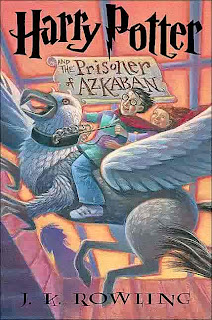
Harry Potter and the Prisoner of Azkaban

(1999)
J.K. Rowling

Finished Reading: 02.2010

Sigh. I really don't know what to write about Harry Potter anymore. This book is very good, just as the others are very good. Each one might actually be getting better, but there isn't anything very deep to comment on, though I was thoroughly entertained. You might even call the book gripping, really. I could comment on the characters, but we know the main ones pretty well by now, and I don't have much more to say about an old rat that turns into a greasy little man, a black dog that turns into your uncle, or a deer that stares annoyingly at you from across a lake - except, cool. Very cool. You get 'em Harry.

I like secret underground tunnels and mysterious treasure maps with disappearing ink. The Marauder's Map is like Google Latitude, except on parchment. It took the muggles ten years to figure that one out for themselves. The big question now, leading up to the next book, is who will be the new Defense Against the Dark Arts teacher? Of course, you knew that would be an issue. Now if only I could gaze at the Marauder's Map to see him approaching...

Monday, February 15, 2010

I Am America (And So Can You!)

(2007)
Stephen Colbert


Finished Reading: 01.2010

Nation, Stephen Colbert is of course absolutely absurd. But that is why we love him. He is the face of televised conservative stereotypes, a self-centered hedonist , and the epitome of over-abundant nationalism. I'm a little surprised that the Stars and Stripes are missing from the cover of this hilarious book. Perhaps Colbert is a little too much America, but that is why he is funny, so three likenesses of his face on the covers works as well as a flag. Appropriately, if the character Colbert could become a book, he has become so in this bespectacled binding. Complete with red page edges that scream for you to pick it up off the shelf, an attached red book mark proclaiming "First Edition" to lure people who are impressed by bright things, and a silver seal of literary excellence to proclaim its very legitimacy, I Am America (And So Can You) begs to be judged by its cover. There are at least a half a dozen other interesting things to be said about the front and back cover, as well as the dust jacket fold-ins, but let's not get carried away.

I can't imagine this book makes any sense if you are unfamiliar with the Comedy Central late night show, The Colbert Report. The only thing to know is that Stephen Colbert is as conservative as they come, as Republican as anyone can possibly be, and the greatest ongoing satirical act this side of Kim Jong Il. He doesn't break character. Though we know his character isn't who he really is, I don't think anyone knows who Stephen Colbert really is. Do we want to know? I think he must be America.

This whole situation reminds me of the Truman Show, the 1998 film where Jim Carrey plays a man who thinks he is living a normal life but is actually the subject of an elaborate television show in which he is the main character. The whole world watches him everyday, and he has no idea. Stephen Colbert is the opposite. He definitely has an idea that the world is watching him everyday, as he is the main character of an elaborate political television show that portrays him as a man living a normal conservative life. Yes, we are all watching him, but we think Colbert is a real person. A real Republican. A real American. He even ran for President of the United States in 2008, though he didn't get very far.

Another thing I wonder about is what real conservatives think of the Colbert Report. For myself, I feel I have a healthy mix of conservative and liberal values, so it is probably my liberal side that finds him so funny. I think he is acting this way to make fun of conservatives, of course. But apparently not everyone realizes this is comedy, which is also pretty funny. But back to the book.

Hopefully, Colbert forces us to consider our own political beliefs (as long as they are his beliefs). While reading his chapters, which range from Religion and Race to Animals and Old People, you will find that at times you are laughing (when you are feeling particularly liberal) and at other times you are reading in earnest, nodding in agreement and forgetting to laugh (as a wave of serious conservatism hits you). If you are reading and not laughing, you are drowning in the conservative side of your brain. Which is exactly what I think the real Stephen Colbert is trying to do. Drown us all in humorous absurdity.

"Multi-Grain."

Saturday, January 30, 2010

Harry Potter and the Chamber of Secrets

(1998)
J.K. Rowling


Finished Reading: 01.2010

Let me take a moment to reflect on Moaning Myrtle and Nearly Headless Nick, two ghosts who roam around Hogwarts (independently), interacting with the students. I figure they might not get much reflection for themselves these days. (Not sure how ghosts actually work). What is more appropriate and Emo than a dead teenage girl haunting a certain toilet stall in the second floor lavatory of a dank old school, crying her eyes out, sobbing and moaning simply because she is a ghost? Talk about stage fright. She probably had skin problems, and that stall is probably covered in boy-band stickers. And then there is Sir Nicholas de Mimsey-Porpington, who died many centuries ago but escaped total separation of his head from his body due to an unfortunately dull axe incident, coming so close to being headless but now remaining nearly so. Very tragic. Let us not aspire to his fate.

I don't blame the young witches at Hogwarts for staying away from Myrtle's stall, but she is a lot better to unexpectedly run into during a mad dash for a quick tinkle between Herbology and Defense Against the Dark Arts than if you were about to drop your trousers and hear Nearly Headless Nick floating over from the next urinal, droning on about proper blade sharpening techniques. I don't think we cry in the bathroom enough.

Speaking of which, I wonder how the owls get on? After flying from London to Swindon, back to Hogwarts, back to London, and on to other places where the mail must be delivered, the owls have to return to their wee wooden cages in the dorms, with tired wings and what... some hay to sleep on?. Does Harry really keep Hedwig in a cage all night until he needs to send another message to ... oh wait, he doesn't have any other friends. Poor Hedwig. And does Errol just languish in his prison for weeks on end? We know teenage boys don't want to talk to their mother's very often, but this sounds like cruel slavery to me. I hope there is some sort of magic chamber that we don't know about, where owls can relax and shoots some billiards while off-duty. Maybe read the latest hoots or drink a brew. Of course, sparrows would probably deliver their messages, which is another issue for the unions.